

Price :
QTY :
CART TOTALS :
There are items
in your cart
CART TOTALS :
Finding crappie is only half the battle. Once you put a jig in front of them, you still have to make them eat it.
That is where crappie jigging cadence comes into play.
Cadence is more than how fast you reel or how often you shake the rod tip. It's the combination of retrieve speed, direction, fall rate, rod movement, and the pause between movements.
Some days crappie want a jig steadily swimming through the water column. Other days they will follow that same presentation without touching it. Slow the bait into a pendulum, hover it in their face, or give it one tiny hop followed by a pause, and suddenly that same fish eats.
The key is learning what each crappie jig retrieve does underwater and knowing when to switch from one cadence to another.
Before worrying too much about jig color or changing plastics every five minutes, learn to control how your bait moves through the strike zone.
One of the easiest mistakes to make when jigging for crappie is doing too much.
It is natural. You have a fishing rod in your hand, you are watching the jig on forward-facing sonar, and a crappie is sitting there staring at it. Your first instinct is usually to shake the bait, twitch it, lift it, drop it, or otherwise make something happen.
Sometimes that works.
A lot of times, it does the exact opposite.
Remember that movement at your rod tip gets transferred down a tight fishing line. What feels like a tiny twitch in your hand can make the jig jump substantially more than you intended. Crappie, particularly pressured, cold-water, or neutral fish, do not always want to chase that movement.
Think about cadence as a controlled sequence.
You make the jig move enough to attract attention. Then you give the fish an opportunity to eat it.
That movement might be a steady horizontal swim, a slow pendulum toward the fish, an almost motionless hover, or a tiny hop followed by a pause.
Choosing between those presentations starts with how you deliver the jig. If you want to dig deeper into that part of the equation, read Shooting vs. Casting vs. Vertical Jigging: Choosing the Right Crappie Presentation. 1standard's broader presentation guide also emphasizes controlling depth, speed, and angle rather than simply cycling through colors.
Once the jig gets there, cadence takes over.
There is no single best retrieve for a crappie jig.
Instead, look at what the fish are doing.
Active crappie suspended away from cover and chasing baitfish generally let you get away with more movement. They may track a swimming jig several feet before eating it.
A crappie glued to a brush pile is different. So is a fish that comes toward your jig, stops a foot away, and refuses to close the gap.
Those fish are telling you something.
With forward-facing sonar, the feedback is obvious because you can watch the response in real time. Without it, you can read the bite through follows, short strikes, missed fish, and how often you get bit on a particular part of the retrieve.
The important thing is not to immediately assume you have the wrong color.
If a fish follows your bait, you already got its attention. Before changing the lure, change what that lure is doing.
That is the real value of understanding multiple crappie jigging cadences.

Swimming a crappie jig is one of the best ways to cover water and catch active suspended fish.
It is also one of the easiest retrieves to overdo.
The goal is not to burn the bait back to the boat. Instead, you want a controlled horizontal track that keeps the jig at approximately the same depth for as much of the retrieve as possible.
Cast beyond the target, let the jig count down to the desired depth, and begin a slow, steady retrieve. Keep rod movement to a minimum and let the jighead and plastic do the work.
Pay attention to how quickly the jig climbs.
As you reel, line angle naturally begins pulling the bait upward. If you started at 10 feet but the jig is running five feet deep by the time it crosses the fish, you are not really fishing the depth you thought you were.
Slow the retrieve, lower your rod angle, or occasionally pause long enough for the jig to settle back into the zone.
Swimming works especially well for crappie roaming open water, fish feeding around shad schools, active fish suspended above brush, and crappie positioned outside docks or standing timber.
It is also an ideal situation for the 1standard Swimmer1. Its flexible body and Motion Slots are designed to let the bait move freely even during slower presentations, making it a natural choice when the goal is maintaining swimming action without having to overwork the rod.
Around submerged cover, try keeping that swimming retrieve over the top rather than running directly through the limbs. The 1standard guide to fishing brush piles for crappie goes deeper into using entry angle and depth control to bring a jig across suspended fish without spending half the day breaking off.
The pendulum retrieve is one of the most useful crappie presentations to understand, especially for suspended fish.
Instead of steadily reeling a jig horizontally, you use line tension and gravity to let the jig swing through the water column.
Pitch or cast the jig beyond the target and allow it to fall. As the line tightens, the jig begins swinging back toward you in an arc rather than dropping completely vertically.
That arc is the pendulum.
The beauty of this retrieve is that it combines horizontal movement with a controlled fall. The bait is still moving enough to look alive, but it does not require a crappie to chase it across several feet of water.
Cast distance changes the arc. So does jig weight, line angle, rod position, and how much tension you maintain.
If you are using forward-facing sonar, watch where the jig crosses the fish. If your bait swings beneath the target before reaching it, shorten the presentation or begin controlling the fall sooner. If the jig stays too high, give it additional time or distance to sink.
A pendulum can be especially effective around standing timber, the outside edge of brush, isolated suspended fish, and crappie that show interest in a swimming jig but continually stop short.
The biggest mistake is turning the pendulum into another steady retrieve.
Do not immediately start winding when the jig gets near the fish. Let gravity, line tension, and the jighead create the movement.
Jig weight makes a major difference here. A lighter jig gives you more hang time and a slower arc, while additional weight provides better control in deeper water, wind, or current. For a deeper breakdown of that relationship, see Jig Heads for Crappie: How to Stay in the Strike Zone Longer. 1standard's guide specifically discusses using 1/16- versus 1/8-ounce heads to adjust fall rate and depth control.
Sometimes the best crappie jig retrieve hardly looks like a retrieve at all.
Hovering is about holding your jig in an extremely small strike zone with minimal vertical or horizontal movement.
The jig is not literally floating motionless in the water. Gravity is still working against you. Boat movement, current, line angle, and your hands all affect the bait.
Your job is simply to minimize those movements.
Get the jig slightly above the fish and hold it there.
Do not immediately drop the bait toward a crappie that will not commit. Whenever possible, make the fish come up to the jig.
If a crappie begins rising, you can even slowly raise the bait with it. Think inches instead of feet.
This technique shines around pressured fish, during cold fronts, in winter, around tight brush, and when you can watch crappie repeatedly approach your jig on forward-facing sonar but refuse to eat it.
A subtle plastic matters because you want the bait to retain some life without requiring constant rod movement.
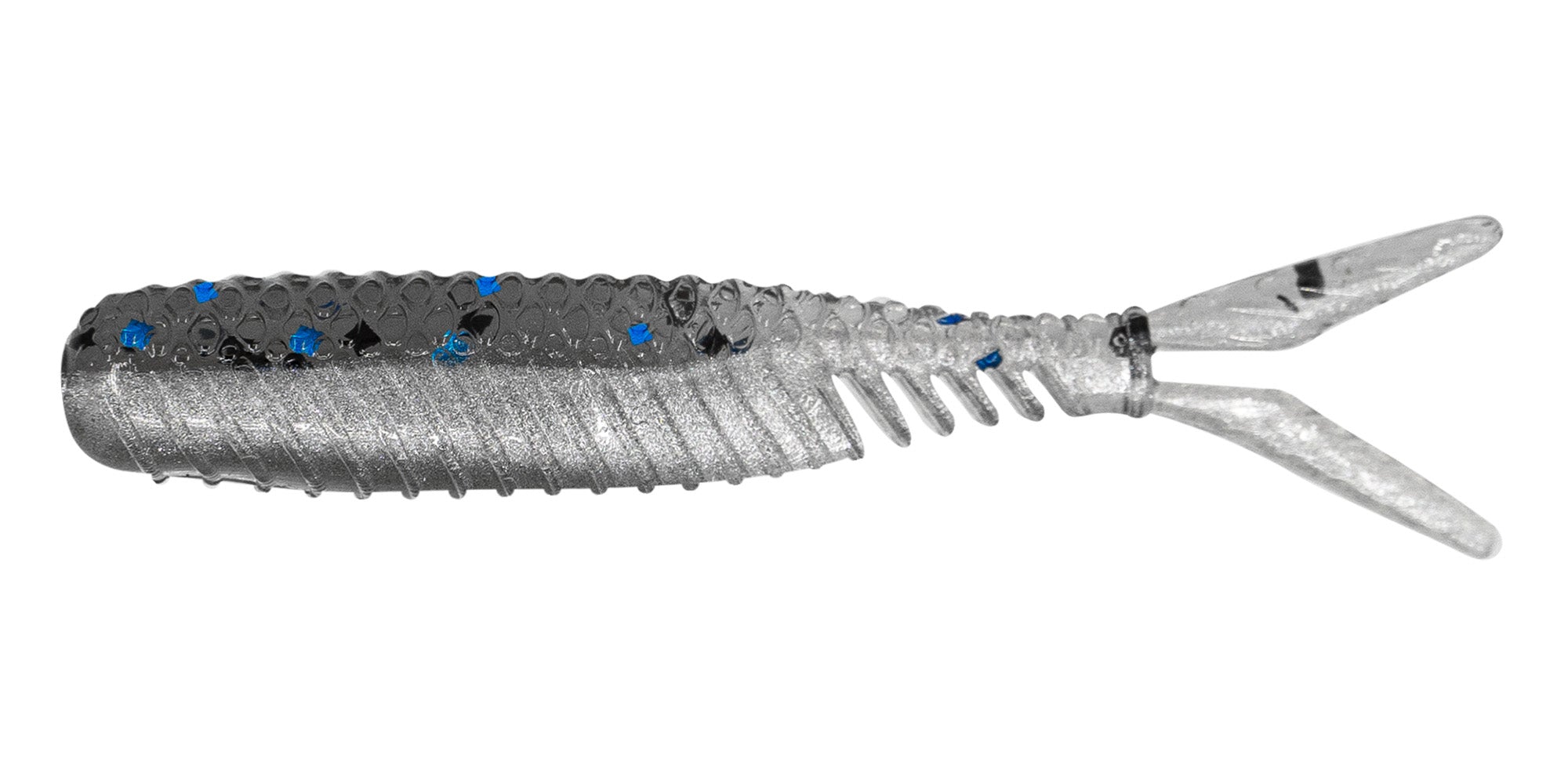
The 1standard Minnow1 fits that role well. Its Action Hinge and Motion Slots are designed to let the tail quiver with very slight input, allowing the angler to keep the overall presentation quiet while the plastic still has movement.
That same idea applies beyond plastics. A hair jig can be deadly when fish want something that moves naturally while being held nearly still. The Minnow4 Hair Jig, for example, uses hand-tied feather, chenille, and Mylar components that provide a different look for pressured crappie.
When difficult weather is part of the equation, Cold Front Crappie: Pressure-Proof Adjustments in Head Size, Color, and Plastic Action is a good next read. That guide goes deeper into reducing speed and adjusting plastic action when fish get finicky.
There is a big difference between a micro-hop and ripping a jig.
For crappie, think small.
A short movement of the rod tip is often plenty. Give the jig a quick lift, let it settle back into position, and stop.
That last part matters.
The hop is there to get attention. The pause is there to get the bite.
This technique works particularly well when vertically jigging over brush, targeting an individual suspended crappie, fishing around standing timber, or dealing with fish that seem interested in your bait but need something to trigger them.
Imagine a crappie staring at your jig.
One tiny hop suddenly changes the profile and position of the bait. The fish reacts and turns toward it. Now instead of immediately hopping the jig again, hold it still and let the crappie close the distance.
That is very different from constantly bouncing the rod tip.
Too much movement can make the bait look unnatural, pull it away from the fish, or send your jig directly into a brush pile.
Around cover, especially, resist the urge to pop the jig aggressively. Controlled lifts, slow swims, and small pendulum movements usually give you much better control than repeated hard snaps. 1standard's brush pile crappie guide makes the same point when discussing snag reduction around submerged wood.
One common thread connects swimming, penduluming, hovering, and micro-hopping.
The pause.
Anglers spend a lot of time thinking about how to make a lure move. Sometimes we do not spend enough time thinking about what happens after it moves.
Movement can call attention to the jig. A pause can make that jig easy to eat.
Even during a swimming retrieve, changing speed or briefly stopping the bait can trigger a follower. On a pendulum, the change in speed as the jig settles through its arc may be the important part. With a micro-hop, the strike may come after the jig returns to position and becomes still.
That means you should pay attention to when bites happen.
If every crappie hits immediately after a pause, that is not a coincidence.
Extend the pause.
If fish eat while the jig is actively moving, keep it moving.
Let the fish tell you what cadence they want instead of forcing every fish to react to your favorite retrieve.
Your jighead does more than carry the hook.
Weight changes how quickly the bait falls, how easily you maintain contact with it, how it behaves on a pendulum, and how well you can keep it at a specific depth.
A 1/16-ounce head is often useful when you want a slower fall, more hang time, or a softer presentation.
Move to 1/8 ounce when depth, wind, current, or the need for precise control makes the lighter jig difficult to track.
There is no prize for fishing the lightest jig possible.
Use the lightest weight that still lets you control the presentation.
The 1standard Bait Jighead is available in both 1/16- and 1/8-ounce sizes and is designed for casting, vertical jigging, and forward-facing sonar presentations, so you can change fall rate and depth control without completely changing your basic rig.
Plastic shape matters too. Paddle- and swimming-style baits add resistance and movement, while more subtle minnow shapes can let you hover or pendulum with less action. For more on matching plastics to presentation, see Crappie Plastics: Tips for Using Soft Baits Effectively.
Instead of treating these four retrieves as completely separate techniques, use them together.
Start with enough movement to determine how aggressive the fish are, then gradually take movement away.
If crappie are roaming and obviously chasing bait, start with a swim.
If fish follow the swimming jig but will not commit, slow things down and bring the bait through them on a pendulum.
If they track the pendulum and stop, hold the jig in their strike zone and hover it.
If the fish loses interest in a motionless bait, give the jig one micro-hop and stop again.
Think of the progression as:
Swim → Pendulum → Micro-Hop → Hover
You do not have to follow that exact order every time. The important part is understanding what you are changing.
You are reducing or increasing movement based on the fish's response.
That is a much more efficient adjustment than randomly changing jig colors, plastic styles, and head sizes every time a crappie refuses to bite.
The best crappie anglers are repeatable.
When you catch one, think about what happened immediately before the bite.
Was the jig steadily swimming?
Did the fish eat as the bait fell through a pendulum?
Did it strike immediately after a micro-hop?
Did you hold the bait completely still for several seconds before the fish finally rose and inhaled it?
Also pay attention to depth, cast distance, line angle, and retrieve speed.
Then do it again.
Forward-facing sonar makes those details easier to see, but you do not need electronics to develop a repeatable crappie jigging cadence. Your bites provide the same information if you pay attention.
The mistake is catching one fish and then going right back to fishing however you were fishing before.
A bite is feedback.
Use it.
When crappie are aggressive, give them enough movement to trigger their predatory instinct. When they get stubborn, take movement away. When they need a little encouragement, give the bait a subtle hop and then let it sit.
The best crappie jig retrieve is not always the one with the most action.
More often, it is the one that keeps your jig at the right depth, moving at the right speed, for long enough that a crappie finally decides to eat it.