

Price :
QTY :
CART TOTALS :
There are items
in your cart
CART TOTALS :
Brush piles are some of the best places to catch crappie, but they can also be some of the most frustrating places to fish. One cast gets bit. The next three get hung. You change colors, change baits, change rods, and before long, you are fishing the same pile with no real system.
The difference between randomly casting at brush and consistently catching crappie from brush usually comes down to three things: entry angle, snag reduction, and repeatable depth control.
Crappie use brush piles for shade, ambush cover, protection, and access to baitfish. But that does not mean every fish is buried in the thickest part of the pile. Many crappie suspend above the brush, sit on the outer edges, or hold just off the cover where they can slide in and out to feed. When you understand how your jig enters the cover, how deep it runs, and how to repeat the same productive path, brush pile fishing becomes much more efficient.
Crappie are structure-oriented fish. They like places where they can relate to cover, stay close to food, and avoid open-water pressure. Brush piles give them all of that in one place.
A good brush pile can hold fish in spring, summer, fall, and winter, but the way crappie position themselves on that brush changes with water temperature, light conditions, bait movement, fishing pressure, and oxygen levels. Some days they are high in the cover. Other days they are buried deep. Sometimes they are not in the brush at all, but suspended off the side, waiting for bait to pass.
That is why brush pile fishing is not just about finding cover. It is about figuring out where the fish are positioned on the cover and then presenting your jig at the right depth without dragging it through every limb.
For more general crappie fishing fundamentals, 1standard’s article on 10 Crappie Fishing Tips to Catch More Slabs is a good supporting resource.

One of the biggest mistakes anglers make is casting directly into the middle of the brush pile on the first cast. That might catch a fish, but it also increases your odds of snagging immediately or spooking fish that were set up on the outside edge.
Instead, work from the outside in.
Start by targeting the highest-percentage zones:
The top of the brush
The outside edge
The shaded side
The wind-blown side
The deepest edge
Any open pockets within the brush
The side closest to a drop, creek channel, dock, or baitfish
Crappie often position themselves where they can feed without using extra energy. If the brush pile sits near deeper water, the deep side may reload throughout the day. If baitfish are moving across the top, the fish may suspend high in the water column. If the sun is bright, the shaded side may be better.
Before changing baits, try changing your angle. A small adjustment in boat position or casting direction can make the same jig look completely different to the fish.
Your entry angle determines how your bait moves through the strike zone. It also determines how often you get hung.
A bad angle pulls the jig directly into limbs. A good angle lets the jig swim, glide, or fall past fish without constantly burying into the cover.
There are three basic brush pile angles to understand.
This is often the best starting point when crappie are suspended above the brush. Cast past the pile, count the jig down, and retrieve it just over the top of the cover.
This approach keeps the bait visible to fish feeding upward and reduces the number of limbs your jig has to contact. It also works well with a swimming plastic like the Swimmer1, especially when fish are chasing baitfish around the pile.
The outside edge is one of the most dependable places to catch crappie from brush. Instead of throwing into the thickest cover, cast along the side of the pile and keep the jig moving parallel to the brush.
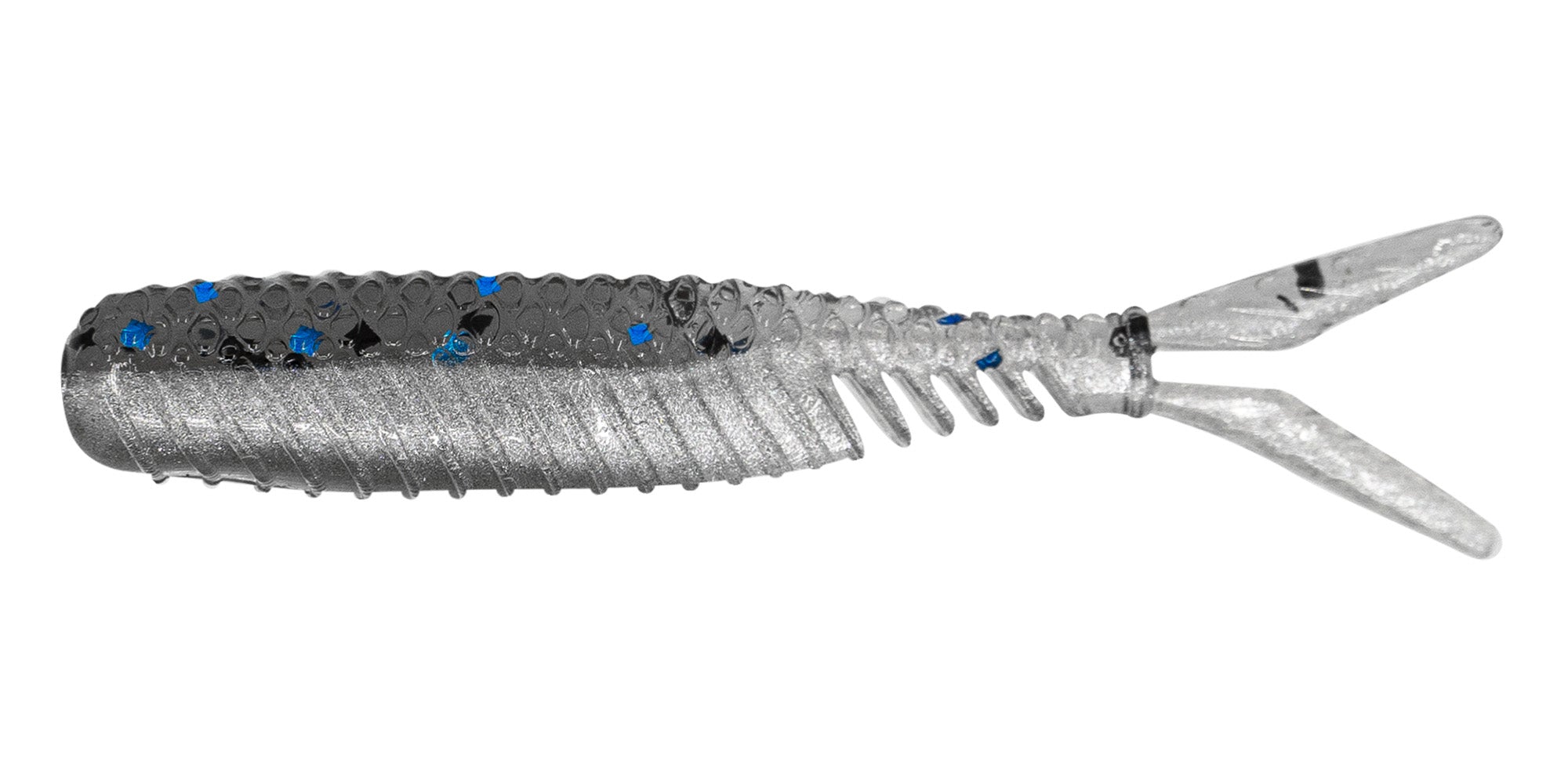
This is a great approach with a subtle minnow-style plastic like the Minnow1. It gives fish a natural baitfish profile without forcing the jig into the heaviest limbs.
When crappie are tight to the brush or when you can see them on electronics, a vertical presentation can be the cleanest way to stay in the strike zone.
Drop straight down, stop above the fish, and use small lifts or slight pendulum movements. Avoid dropping below the fish unless they are clearly positioned low and feeding downward. Crappie usually feed up, so keeping the jig slightly above them is often more productive.
The Bait Jighead is a strong fit for this style because it is built for casting, vertical jigging, and forward-facing sonar presentations with a variety of plastic shapes.
Color matters, but depth usually matters more.
A perfect color fished two feet below the fish may never get bit. A basic color held just above their eyes can get crushed. That is especially true around brush piles, where crappie may suspend at a very specific level.
A good brush pile system starts with depth control.
Here are a few ways to stay more consistent:
Count your jig down before starting the retrieve.
Watch your line angle during the cast.
Use the same cast distance after getting bit.
Pay attention to where the bite happened: top, side, edge, or open water.
Repeat the same retrieve speed before changing baits.
Keep the jig above the fish whenever possible.
One Standard’s article on Crappie Plastics: Tips for Using Soft Baits Effectively makes an important point: plastics help anglers control fall rate, retrieve speed, bait profile, and presentation around brush, timber, docks, and bait schools. That control is exactly what makes a jig-and-plastic setup so effective for brush pile crappie fishing.
Jighead weight controls fall rate, feel, casting distance, line angle, and how well you can repeat the same presentation. Around brush piles, the goal is not always to go as light as possible. The goal is to use the lightest jig that still gives you control.
A 1/16 oz jighead is a good starting point when fish are shallow, suspended high, or acting neutral. It gives the bait a slower fall and can help keep it above the brush longer.
Use 1/16 oz when:
The brush is shallow to mid-depth.
Fish are suspended over the top.
Conditions are calm.
Crappie are pressured or finicky.
You want a slower, more natural fall.
A 1/16 oz Bait Jighead paired with a 2-inch Minnow1 is a strong all-around setup for a subtle baitfish presentation around brush.
A 1/8 oz jighead is better when you need more control. In deeper water, in wind or current, or when you need to stay connected to the bait, the extra weight helps keep the jig in the zone.
Use 1/8 oz when:
The brush is deeper.
Wind is creating slack line.
You need better feel.
Fish are holding tight to a specific depth.
You are using forward-facing sonar.
You need to repeat the same cast or drop precisely.
The Bait Jighead comes in both 1/16 oz and 1/8 oz sizes, making it easy to adjust without completely changing the profile of your presentation.

If you fish brush piles, you are going to hang up sometimes. That’s part of the game. But good brush pile anglers don’t snag as often because they control their angle, line tension, rod position, and retrieve speed.
The goal is not to avoid the brush completely. The goal is to contact cover without burying the hook.
Here are a few ways to reduce snags:
Do not start in the thickest part of the pile. Pick off active fish from the outside before moving into heavier cover.
When swimming a jig over the top of brush, a higher rod angle helps lift the bait and keep it from digging into the limbs.
Aggressive rod snaps can drive the jig into the cover. Around brush, subtle lifts, slow swims, and controlled pendulum retrieves are often better.
If the jig touches a limb, do not instantly jerk. Stop, lift lightly, shake the rod tip, or give the bait slack. Often, the jig will roll over the limb rather than stick.
If you get hung on back-to-back casts, do not assume the fish are not there. Your angle may simply be wrong. Move the boat slightly and bring the jig through the pile from a different direction.
A crooked plastic makes the jig track sideways, creating more unwanted contact with the brush. Both Minnow1 and Swimmer1 are designed with round bodies for easy rigging and flat heads that match up cleanly against a jighead.
Different brush pile situations call for different presentations. Here are a few starting points.
|
Situation |
Recommended Setup |
Why It Works |
|
Shallow brush, calm water |
1/16 oz Bait Jighead + 2" Minnow1 |
Slow fall and subtle baitfish profile |
|
Deep brush or wind |
1/8 oz Bait Jighead + Minnow1 |
Better feel and repeatable depth control |
|
Fish suspended above brush |
Bait Jighead + Swimmer1 |
Swimming action helps cover the top of the pile |
|
Active fish chasing bait |
Swimmer1 |
Built for crappie feeding on roaming baitfish |
|
Neutral fish tight to cover |
Minnow1 |
Subtle movement with minimal rod action |
|
Brush near docks |
Dock Shooter Jighead + Minnow1 |
Helps keep plastics in place when skipping or shooting |
|
Cold front or tough bite |
Minnow4 Hair Jig |
Natural, subtle movement when fish do not want an aggressive plastic |
Not all brush piles are out in open water. Some of the best crappie cover is around docks, dock cables, shade lines, and brush placed near dock structures.
This is where casting angle and bait control become even more important. You may need to skip, shoot, or pitch a jig into tight openings without the plastic sliding down the hook.
The Dock Shooter Jighead is built for this exact problem. It uses a spring wire molded into the head to help hold plastics in place when skipping or shooting under docks. That makes it a smart option when brush, shade, and docks all come together.
Pair it with a Minnow1 when fish are tucked under shade or holding close to dock-related cover.
Brush piles are productive, but they punish sloppy presentations. Avoid these common mistakes.
Crappie usually feed upward. If your jig falls below them, you may be out of the strike zone even if you are close to the brush.
Color is important, but only after depth and presentation are right. Before changing colors, make sure your bait is running where the fish actually are.
Start on the outside. Active fish often sit on the edges, and you can catch them without blowing up the pile.
A light jig is great when you can control it. But if wind or depth creates too much slack, a heavier jighead may help you stay connected.
Many crappie plastics are designed to move with minimal effort. Around brush, too much action can look unnatural and cause more snags.
When you get bit, pay attention. Where was the jig? How deep was it? What angle were you using? Repeat that before experimenting.
Crappie brush pile fishing is not just about finding a pile and throwing a jig into it. The best results come from fishing with control.
Control your entry angle. Control your depth. Control your line. Control your retrieve. Then use the right jighead and plastic combination to repeat the presentation once you get bit.
Brush piles will always cost you a few jigs. But with the right system, they will give back a lot more crappie.