

Price :
QTY :
CART TOTALS :
There are items
in your cart
CART TOTALS :
Cold fronts have a way of making good crappie anglers second-guess everything. One day they are thumping a jig like they have not eaten in a week, and the next day they are barely breathing on it. The fish did not disappear. They just got picky.
When a front rolls through, crappie often pull tighter to cover, suspend a little differently, or stop chasing as far. Bluebird skies, cooler water, and rising pressure can shrink their strike zone down to almost nothing. That does not mean you need to tear through every bait in the boat. It means you need to make smarter adjustments.
The best cold front crappie system is simple: get your jig in front of the fish, control your fall rate, match your color to visibility, and tone your bait action up or down based on how the fish react.
Crappie are not always as fragile as anglers make them sound, but they are sensitive to quick changes. After a cold front, baitfish may shift, water temperature can dip, light penetration changes, and crappie often get less willing to chase a fast-moving bait.
The biggest mistake is fishing like they are still in a feeding mood. If fish were roaming and crushing a swimming bait before the front, they may still be in the same general area afterward, but they might be tucked closer to brush, buried deeper under docks, or suspended just off the cover.
That is when precision matters. You are not trying to call fish from ten feet away. You are trying to put a bait close enough that a crappie barely has to move to eat it.

Before you start changing colors every other cast, look at your jig head size. Head size controls how fast your bait falls, how well it stays at depth, and how long it hangs in the strike zone. During a cold front crappie bite, that can be the difference between getting ignored and getting thumped.
A 1/16-ounce jighead is usually the better starting point when fish are shallow, suspended high, spooky, or holding under docks. It falls slower, glides better, and gives a crappie more time to commit. If you are shooting docks or pitching to visible cover in calm water, a lighter head can keep the bait from blowing past fish too quickly.
A 1/8-ounce jighead shines when you need better control. Deeper brush, wind, vertical presentations, and forward-facing sonar situations all call for a bait you can keep honest. If your jig is drifting above the fish, swinging too much, or taking forever to reach the right depth, bumping up to 1/8 ounce can clean up your presentation.
The 1standard Bait Jighead is a solid all-around choice here because it works for casting, vertical jigging, and forward-facing sonar techniques. Keep both 1/16- and 1/8-ounce sizes handy so you can adjust fall rate without changing the entire bait.
When fish slide under docks after a front, the Dock Shooter Jighead makes sense. Its design helps keep plastics pinned while skipping baits into hard-to-reach shade, which is exactly where pressured crappie like to sit. For anglers who like testing two looks at once, the Stacker Jighead can help compare colors or profiles on the same drop. Just check your local regulations before fishing more than one jig on a line.
Cold front crappie color selection should not be random. Start with water clarity and light conditions, then adjust based on how fish react.
In clear water, especially under bright post-front skies, natural and subtle colors are usually best. Smoke Show, Green Shad, Spilled Milk, and Freshwater Shrimp are good starting points when fish can see well but do not want something loud. Pairing those plastics with Pearl, Bare Shad, or another natural jighead color keeps the whole package clean.
In stained water, crappie still need a natural profile, but they also need help finding the bait. This is where colors with contrast start to shine. Moolah, Electric Chick, Candy Corn, Blue Grass, and Chart can give fish a better target without going overboard.
In muddy water or low light, do not be afraid of stronger silhouettes and brighter combinations. Black Chart, Junebug Chart, Lemon, and ChartyPox pairings can stand out better when visibility is limited.
A good rule is this: if fish are following but not eating, tone the color down. If they are not reacting at all, give them more contrast.
Once head size and color are close, plastic action is the next big adjustment. Cold front crappie often tell you what they want by how they respond. If they rush the bait and stop short, you may have too much action or too much speed. If they never move toward it, you may need more vibration, profile, or visibility.
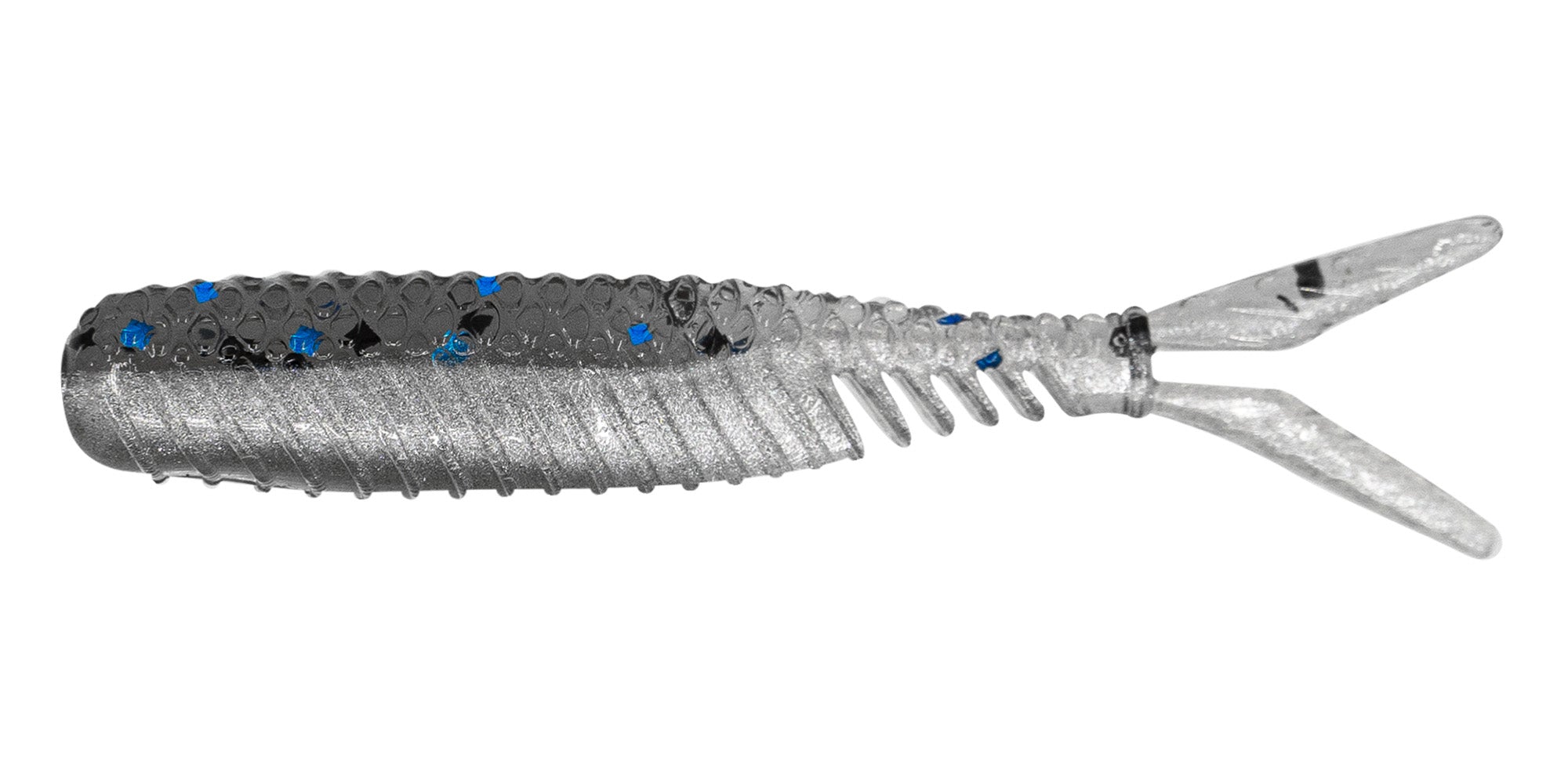
The Minnow1 is a strong cold-front plastic because it gives off a baitfish profile without being too aggressive. It is a good choice for slow swimming, vertical jigging, pendulum presentations, or holding a bait nearly still around suspended fish. When crappie are looking but not committing, a subtle minnow-style bait on the right jighead can get bites that louder plastics miss.
The Swimmer1 fits better when fish are still willing to move. Wind-blown banks, baitfish schools, pre-front feeding windows, and active fish over brush are all good times to pick up a swimming bait. The key after a front is not to overwork it. Let the bait do the work, keep your retrieve slow, and pay attention to followers.
When the bite gets extra tough, the Minnow4 Hair Jig is the clean-up hitter. Hair has a softer look in the water and keeps moving even when you barely move the rod tip. That natural breathing action is deadly when crappie are cold, pressured, or tucked tight to cover.
For clear, calm, bluebird conditions, start with a 2-inch Minnow1 on a 1/16-ounce Bait Jighead. Keep the bait above the fish, move it slowly, and give them time to eat.
For deeper brush or timber, go with a Minnow1 or Minnow4 Hair Jig on a 1/8-ounce head. The heavier size helps you stay in contact with the bait and repeat the same depth.
For docks, rig a Minnow1 on a 1/16-ounce Dock Shooter Jighead and skip it as far back into the shade as you can. After the bait lands, do not rush it out. Let it fall, hold it, and work it through the darkest part of the dock.
For active fish around bait, use the Swimmer1 on a 1/16- or 1/8-ounce Bait Jighead depending on depth and wind. If fish are chasing, keep it moving. If they start following without eating, slow down or switch back to the Minnow1.
The best cold front crappie anglers do not change everything at once. They make one adjustment, watch the fish, and then make the next move.
Start by finding fish and identifying their depth. Then slow your presentation down. If your bait is falling too fast or not staying in the strike zone, adjust head size. Once the bait is running right, match color to water clarity. After that, fine-tune action. Go from Swimmer1 to Minnow1 when fish get hesitant, and from Minnow1 to Minnow4 Hair Jig when they want something even softer.
That process keeps you from guessing. More importantly, it helps you learn what the fish are telling you.
Cold front crappie are not impossible. They just make you fish cleaner.
The right jig head size keeps your bait in the strike zone. The right color helps fish find it. The right plastic action makes the bait look like an easy meal instead of something they have to chase.
Keep a small box built around 1/16- and 1/8-ounce Bait Jigheads, Dock Shooter Jigheads, Minnow1 plastics, Swimmer1 plastics, and a few Minnow4 Hair Jigs, and you can handle most post-front situations without overthinking it. The 1standard All-In-One Kit is an easy way to cover those bases in one setup, but the bigger lesson is the system itself.
When the pressure rises and the bite gets stingy, do not panic. Slow down, stay precise, and make the fish say no to the right bait.