

Price :
QTY :
CART TOTALS :
There are items
in your cart
CART TOTALS :
The best crappie jig weight is the lightest jighead that still lets you accurately reach, control, and repeat your presentation at the depth where the fish are holding.
For many everyday crappie situations, 1/16 ounce is a good starting point in shallow to moderate depths and calm conditions, while 1/8 ounce becomes increasingly useful as fish get deeper or wind, current, and boat movement make a lighter jig harder to control.
But jig weight should never be based on depth alone. A better system is:
Depth: How deep do you actually need to present the jig?
Control: Can you reach that depth, manage your line, and repeat the presentation?
Fall Rate: Once you have control, would the fish respond better to a faster drop or more hang time?
Use depth to choose a starting weight. Then let conditions and fish behavior tell you whether to stay there, move lighter, or move heavier.
Use this chart as a starting point, not a hard rule. Line diameter, plastic size, wind, current, casting angle, boat movement, and presentation style can all change how a jig behaves.
| Fish / Presentation Depth | Calm-Condition Starting Point | Wind / Current Adjustment | Main Goal |
|---|---|---|---|
| Very shallow | Favor lighter weights such as 1/32–1/16 oz | Add weight only if control suffers | Slow, subtle fall |
| Shallow to moderate | 1/16 oz | Consider 1/8 oz when line control suffers | Balance hang time and control |
| Moderate | 1/16 or 1/8 oz | 1/8 oz becomes increasingly useful | Match fall rate while maintaining depth |
| Deeper presentations | 1/8 oz is a practical starting point | Add weight if necessary | Reach fish efficiently and repeat the presentation |
| Very deep or strong current | 1/8 oz or heavier as needed | Use enough weight to maintain control | Prioritize depth control |
There is no depth where a 1/16-ounce jig suddenly stops working and a 1/8-ounce jig becomes mandatory.
You may be able to fish 1/16 effectively quite deep in calm water, while strong wind could make 1/8 ounce the better choice at a much shallower depth.
Start with depth. Adjust for control. Fine-tune for fall rate.
If crappie are suspended 10 feet below the surface over 30 feet of water, you are fishing a 10-foot presentation.
The fact that there is another 20 feet of water below the fish does not matter unless you need the jig to reach it.
This becomes especially important when targeting suspended crappie with forward-facing sonar. If fish are sitting high in the water column, using more weight simply because the boat is over deep water can cause your jig to drop through the strike zone faster than necessary.
On the other hand, fish holding much deeper increase the value of additional weight because you need to reach them efficiently and maintain control once you get there.
Fish depth gives you the starting point. The conditions determine what happens next.
For many crappie anglers, 1/16 and 1/8 ounce are two of the most useful jighead weights to understand.
A 1/16-ounce jig is a strong starting choice when:
Fish are shallow or suspended at moderate depths.
Conditions are relatively calm.
You want a slower fall or more hang time.
Crappie are following the bait but reluctant to commit.
You are working slowly above brush or other cover.
You can still accurately track and repeat the presentation.
The last point matters.
Fishing lighter only helps if you can still control the jig.
If a 1/16-ounce head creates so much line bow that you cannot tell where your bait is, the slower fall is no longer providing an advantage.
A light jig that cannot be controlled is not a finesse presentation. It is simply an uncontrolled presentation.
Move toward 1/8 ounce when:
Fish are deeper.
A lighter jig takes too long to reach them.
Wind creates excessive slack or line bow.
Current moves the jig away from the target.
Boat movement continually pulls the bait out of position.
Precise depth control becomes more important.
You repeatedly lose track of a lighter jig.
A heavier jig does not automatically create an overly aggressive presentation.
Sometimes additional weight actually improves finesse fishing. Holding a subtle plastic accurately above a fish with a 1/8-ounce head can be more precise than allowing a 1/16-ounce jig to continually drift away.
The goal is to use the lightest jig you can still control.

Wind does not automatically mean you need a heavier jig.
Watch what the wind is doing to your line and presentation.
If you can still reach the fish, maintain your intended line angle, detect strikes, and repeat the presentation, there may be no reason to change.
If wind begins creating excessive line bow or boat movement continually pulls the jig away from the fish, additional weight can restore control.
Current creates a similar problem. A light jig that falls perfectly in still water may drift away from the target when moving water begins pushing against the line and bait.
Depth may establish your starting point, but the way you deliver the jig also matters.
Vertical jigging creates a relatively direct connection between the angler and the bait. You may be able to control a lighter jig vertically at a depth where the same weight becomes difficult to manage on a long cast.
Casting adds horizontal movement and line angle. A jig that reaches a certain depth easily beneath the boat may behave very differently when being retrieved toward you.
Pendulum presentations add another variable. A lighter jig generally hangs longer and swings more slowly, while additional weight creates a faster, more controlled arc.
Dock shooting often benefits from hang time because the jig needs time to fall beneath the dock. But deeper docks, wind, or the need for more precise control can push the decision toward a heavier head.
This is why two anglers fishing crappie at the same depth can reasonably choose different jig weights.
The jighead is only one part of the complete presentation. Plastic size and shape create resistance in the water, and different profiles can change how a jig falls and tracks.
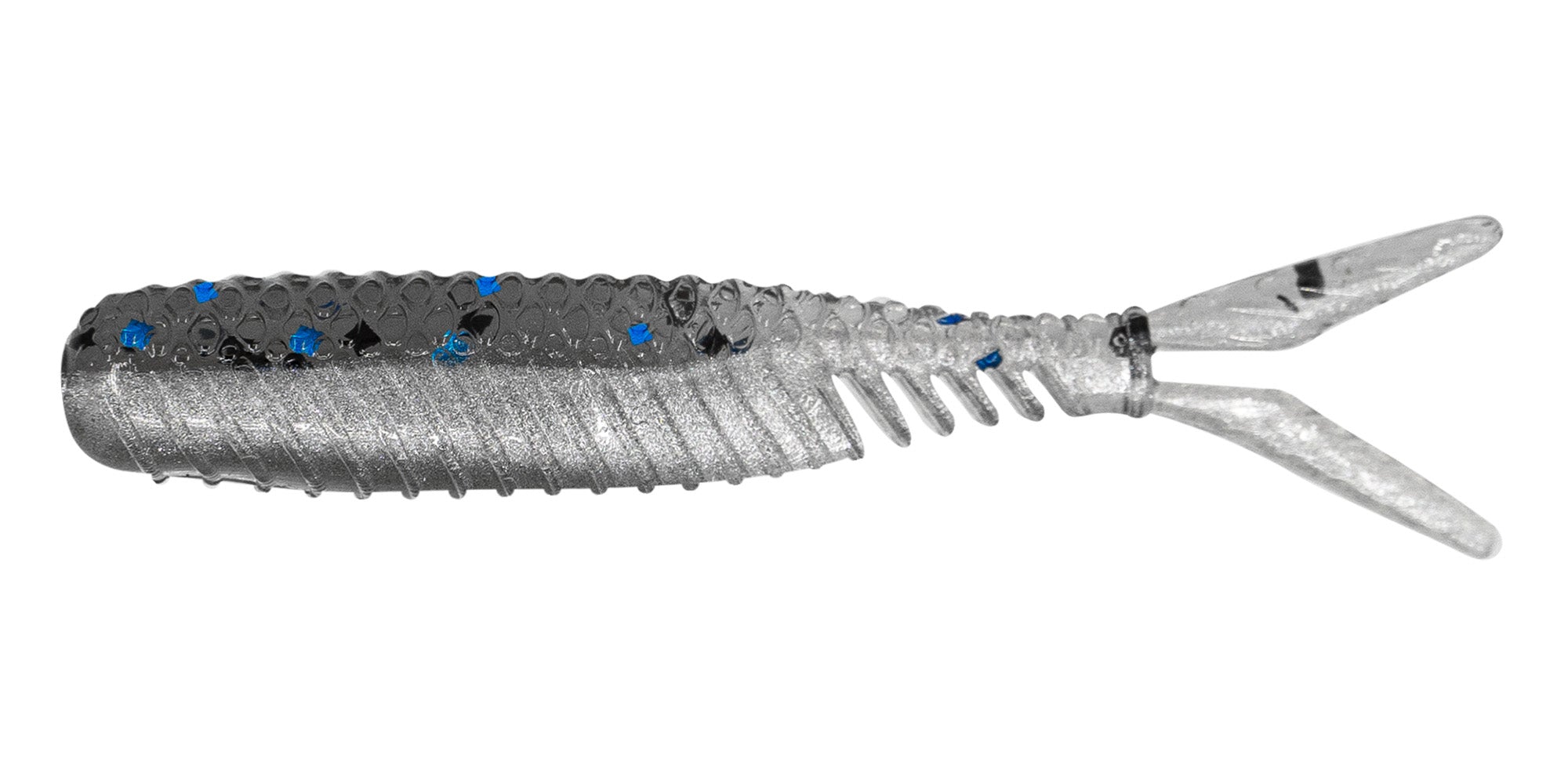
For example, the 1standard Minnow1 is available in 2- and 2.75-inch versions. Those complete rigs should not automatically be expected to behave identically just because they are attached to the same jighead.
A swimming-style bait such as the Swimmer1 also behaves differently once the angler begins retrieving it horizontally.
Hair adds another variable. The 1standard Minnow4 Hair Jig is available in both 1/16 and 1/8 ounce, allowing anglers to change the balance between hang time and depth control while retaining the subtle movement of hair.
Rather than thinking only about the number printed on the jighead package, think about how the complete bait is behaving.
Rather than switching weights randomly, identify the problem first.
| What You Notice | Likely Issue | Adjustment to Test |
|---|---|---|
| Jig takes too long to reach fish | Too light for the depth or conditions | Move heavier |
| Wind continually bows the line | Insufficient control | Move heavier or reposition |
| Current sweeps the jig away | Insufficient control | Move heavier |
| Difficult to repeat the same depth | Insufficient control | Consider heavier |
| Jig drops through fish before they react | Fall may be too fast | Consider lighter |
| Fish follow but repeatedly stop short | Fall may be too aggressive | Test lighter |
| Fish aggressively rise to a fast-falling jig | Faster fall may be triggering bites | Maintain or test heavier |
| Jig hangs above fish too long | Too light or too much resistance | Move heavier |
| Most bites occur on long pauses or slow drops | Hang time may matter | Favor lighter if control remains adequate |
| Light jig is difficult to track on FFS | Control problem | Consider heavier |
These are diagnostic clues, not universal rules. Look for repeated fish behavior before making a major change.

If you find crappie but cannot get them to eat, avoid changing jig weight, plastic, color, cadence, and boat position simultaneously. Start with the specific problem.
If you cannot reach or control the jig: Too little control → move heavier.
If you have control but the jig appears to move through the strike zone too quickly: Too fast through the strike zone → test lighter.
That simple process makes weight selection repeatable instead of turning every adjustment into a guess.
The 1standard Bait Jighead is available in both 1/16 and 1/8 ounce for casting, vertical jigging, and forward-facing-sonar presentations. The same two weights are also available in the Dock Shooter Jighead and Minnow4 Hair Jig.
That allows anglers to adjust weight to solve a presentation problem without completely changing the bait system. For more on how jighead weight affects sink rate, casting, line control, and time in the strike zone, read Jig Heads for Crappie: How to Stay in the Strike Zone Longer.
You do not need to memorize a different crappie jig weight for every depth. Remember three things:
Depth → Control → Fall Rate
Start with the depth of the fish. Use enough weight to maintain control. Then adjust the fall rate based on how the fish respond.
In many everyday crappie situations, 1/16 and 1/8 ounce will give you two useful starting options. Just remember that neither weight is a rule.
Use the lightest jighead that still lets you accurately reach, control, and repeat your presentation at the depth where the crappie are holding.