

Price :
QTY :
CART TOTALS :
There are items
in your cart
CART TOTALS :
For a lot of crappie anglers, live minnows are the starting point. They flat-out catch fish, and they have for years. But once you get comfortable fishing crappie plastics, you start to see why so many serious anglers keep a box full of soft baits rigged and ready. Plastics let you fish faster, change colors and profiles on the fly, cover more water, and stay on active fish without dealing with the hassle of live bait. Artificials are effective enough to catch all the crappie most anglers want, while also making depth control and presentation changes much easier.
For anglers trying to move beyond live bait, the key is not just throwing any soft bait overboard and hoping for the best. Fishing soft plastic baits comes down to picking the right profile, matching the mood of the fish, and keeping your bait where crappie actually want to eat it.
The biggest advantage of crappie soft plastics is efficiency. With live bait, you are constantly replacing minnows, dealing with short strikes that tear bait up, and working harder to keep the presentation consistent. With plastics, you can dial in your depth, change colors quickly, and fish multiple pieces of cover without slowing down.
That matters because crappie often set up around brush piles, standing timber, docks, stake beds, and roaming bait schools. In those situations, a jig and plastic combo lets you control fall rate, retrieve speed, and bait profile more precisely than live bait. Jig-and-plastic presentations remain one of the most dependable ways to catch crappie because they help anglers maintain control over the strike zone.
One of the biggest mistakes anglers make with soft plastic baits is treating every bait like it does the same job. It does not. Some days, fish want a subtle minnow profile that barely moves. Other days, they react better to a swimming bait that looks like it is trying to leave the school.

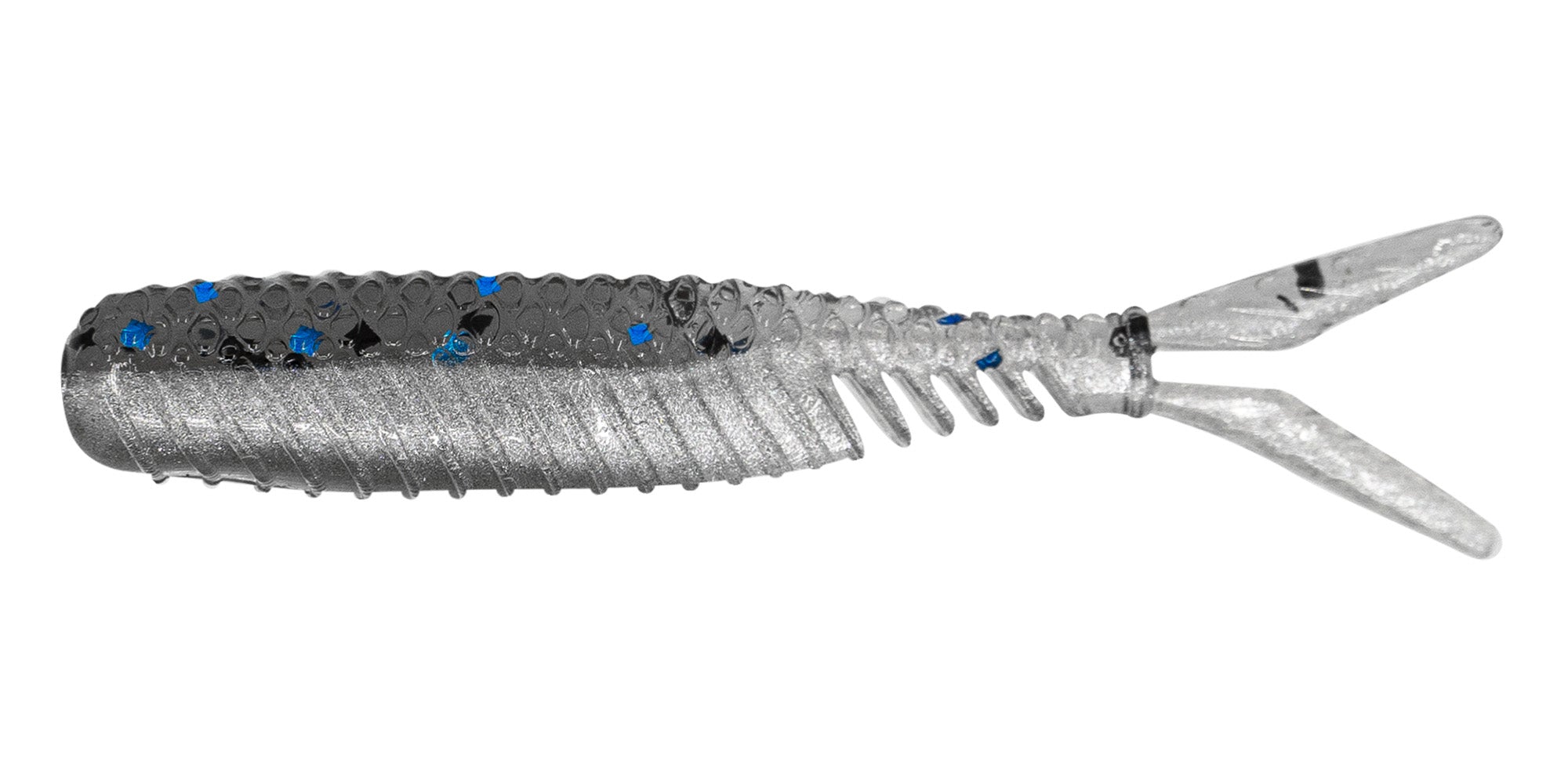
If crappie are keyed in on shad or small minnows, a realistic baitfish profile is hard to beat. That is where the 1standard Minnow1 makes a lot of sense. The bait is built around minnows and shads that crappies feed on every day, and its vertical tail is designed to create a more realistic baitfish profile than many standard crappie plastics. The tail design also allows for a two-tone look, which can add contrast without making the bait look unnatural.
Minnow1 also has an Action Hinge and Motion Slots designed to create movement with very little input. That is a big plus when fish are suspended around brush or timber and do not want an overworked bait. It comes in 2-inch and 2.75-inch sizes, giving anglers a clean way to match the forage and adjust based on how aggressive the fish are.

When fish are feeding on moving bait or cruising open water, a swimmer-style bait can be a better tool. The 1standard Swimmer1 is aimed directly at that scenario. It was designed for crappies feeding on roaming baitfish, and the bait uses cupped tail tabs and Motion Slots to create swimming action at both slow and faster retrieve speeds.
That makes it a strong option when crappie are not locked tight to cover, and you need to cover water with a more active presentation. Instead of forcing a subtle bait to do everything, this gives anglers another profile that better matches active fish.
Rigging sounds basic, but it is one of the most overlooked aspects of effectively fishing soft plastic lures. A crooked plastic kills the action, throws off the profile, and makes the bait track unnaturally. If the lure is supposed to quiver or swim with very little movement, then rigging it straight is critical.
That is one reason both Minnow1 and Swimmer1 stand out. The body on both baits are round for easy rigging on any jighead, and the head is flat so it seats cleanly against the jighead. That sounds like a small detail, but it helps keep the bait aligned and lets the tail work as intended.
Size matters too. A 2-inch minnow profile often fits the everyday crappie bite, while a slightly larger bait can shine when fish are feeding on bigger shad or when you are targeting better-quality fish. In tougher conditions, downsizing can turn lookers into biters. Going smaller can be especially effective in cold water or pressured situations when fish are less willing to commit to a larger offering.

A good plastic still needs the right presentation. One of the most consistent crappie lessons is that jig level matters more than most anglers realize. Crappie often feed upward, so keeping the bait above the fish is usually more productive than letting it fall below them and then trying to reel back through the school.
That leads right into another important point: do not overwork the bait. Plenty of anglers moving away from live bait make the mistake of trying to make a plastic do too much. In reality, many of the best crappie soft plastic baits are designed to move with very little rod action. A slight pendulum, a slow swim, or a controlled glide is often enough.
Minnow1 fits that subtle approach really well thanks to its hinge-and-slot design. Swimmer1 gives you a stronger swimming look when fish are more active. Between the two, you can cover a wide range of crappie moods without overcomplicating the presentation.
Color always gets a lot of attention, but it works best when kept simple. In clear water, natural baitfish colors usually make the most sense, especially when fish are feeding on small shad or minnows. In greener or more stained water, a stronger contrast can help fish locate the bait faster.
The better move is to treat color as a follow-up adjustment after you get the profile and depth right. Once you know the fish are seeing the bait, then you can rotate colors until they show a clear preference.
Plastics are at their best when you need efficiency around cover or when fish are following bait in open water. Around brush piles, timber, and docks, a soft plastic lets you fish cleanly through the zone and quickly repeat the same cast or drop.
When fish are suspended and moving with bait, that’s when a swimmer-style plastic earns its keep. Swimmer1 was built specifically for roaming baitfish situations, while Minnow1 gives anglers a more subtle baitfish option when fish are around cover or acting less aggressively.