

Price :
QTY :
CART TOTALS :
There are items
in your cart
CART TOTALS :
Every experienced crappie angler has been there. You’ve located a good group of fish, figured out their depth, and put your jig right in front of them. On your graphs, you watch a crappie rise toward your bait, follow it for several feet, and then turn away like it never wanted to eat in the first place.
Your first instinct might be to change colors or downsize your jighead. But sometimes the problem isn’t either of those things. It’s the profile and action of your soft plastic.
Not all crappie plastics behave the same way underwater. Some offer a subtle baitfish silhouette with just enough tail movement to look alive. Others produce a more noticeable swimming action that can trigger fish actively feeding on shad and minnows.
Knowing when to use each style is key to consistently catching crappie, especially in pressured water or when targeting individual fish with electronics.
The key isn’t finding one plastic that works everywhere. It’s recognizing what the fish are telling you and choosing a presentation that matches their mood. That becomes easier once you understand how crappie react to different plastic profiles.
When anglers talk about matching the hatch, they usually think first of bait size and color. Those factors matter, but another important piece of the puzzle is how the lure moves through the water.
Two crappie plastics can have nearly identical lengths and colors yet produce completely different reactions from fish.
A soft plastic with restrained tail movement presents differently from one designed to swim with a more noticeable kick or flutter. Neither are automatically better. Their effectiveness depends on presentation speed, available forage, water conditions, and how willing the fish are to chase.
Think about crappie suspended around a brush pile. Those fish may be holding in a relatively small area, occasionally moving up to inspect something passing overhead. A bait that hangs in their strike zone without excessive movement can be effective.
Now picture crappie roaming open water beneath a school of shad. Those fish may be accustomed to chasing moving forage. A plastic with sustained swimming action can give them a more recognizable target.
Another consideration is how the lure appears from the fish’s perspective. A bait might look realistic in your hand but create an unnatural silhouette when rigged crookedly or retrieved at the wrong speed.
That’s why selecting the right crappie plastic goes beyond picking a color that looks good in the package. The next step is deciding when a subtle minnow profile makes more sense than a swimming bait.
Plenty of situations call for doing less with your bait to get more bites. Pressured crappie, cold-front fish, and slabs suspended near cover can become reluctant to chase a moving lure. They may still feed, but they’re willing to travel much less for a meal.
This is where a subtle minnow-style plastic deserves attention.

The Minnow1 is designed to imitate the minnows and shad that crappie regularly feed on. Unlike many conventional soft plastics, it features a vertical tail that creates a distinct baitfish profile. Its Action Hinge and precision Motion Slots produce tail movement with minimal angler input, keeping the action understated and controlled.
That combination is especially useful when fishing vertically or holding a bait nearly stationary around suspended crappie.
Imagine targeting a fish sitting two feet above a brush pile in 18 feet of water. You drop your jig just above its head, but the fish won’t move toward it. Instead of repeatedly snapping the rod tip, you can maintain your position and introduce the slightest movement.
A subtle plastic allows you to keep the bait in the fish’s strike zone without constantly pulling it away.
This approach can also shine after a cold front, when crappie may become less willing to chase. If you’re dealing with those conditions, our article on cold-front crappie adjustments explains how head weight, color, and plastic action work together.
The Minnow1 comes in 2-inch and 2.75-inch versions, giving anglers options for matching forage size or changing the bait’s overall presence.
Remember, subtle doesn’t mean motionless. Even small changes in line tension, boat movement, or rod position can give a properly designed plastic enough movement to look alive. When that isn’t enough, it helps to know when a swimming bait is the better fit.
While subtle plastics have their place, crappie sometimes want a bait that looks like it’s going somewhere. Actively feeding crappie often respond well to swimming presentations, especially when they’re chasing baitfish in open water or moving above brush piles. A swimming-style plastic creates action throughout the retrieve rather than relying primarily on small movements from the angler.

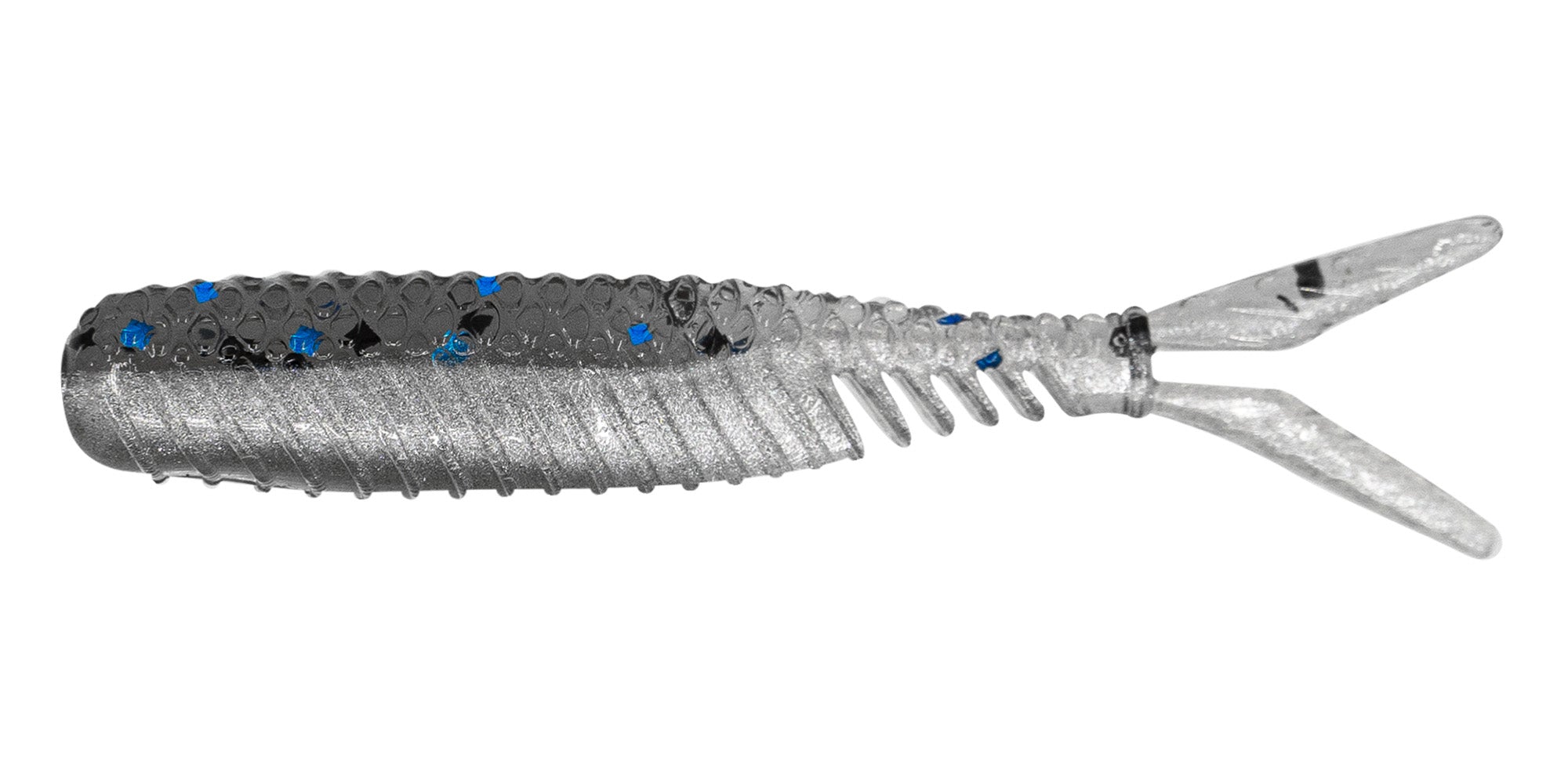
We developed the Swimmer1 for this type of presentation.
At 2.15 inches long, the Swimmer1 features cupped tail tabs that create a stronger swimming motion as the bait moves through the water. Precision Motion Slots allow the body to flex, helping it maintain that action even during slower retrieves.
That last point is important. A swimming plastic doesn’t have to be retrieved quickly to be effective.
Sometimes the best presentation is a slow, steady retrieve that keeps the bait moving horizontally at the same depth as the fish. The tail provides a consistent swimming action while the angler concentrates on maintaining the right speed and depth.
Consider a group of crappie following shad across a submerged creek channel. Those fish aren’t necessarily holding on a specific stump or brush pile. They’re moving with their food. Instead of dropping a jig directly on top of individual fish, a controlled swimming presentation can intercept crappie as they travel.
Swimmer1 also makes sense when fish are suspended above cover and willing to move several feet to strike.
Watch how the fish react. If crappie begin tracking the bait immediately and accelerate toward it, that’s a good indication your presentation has their attention.
But if they repeatedly follow without committing, don’t assume you need to reel faster. Often, slowing down or switching to a more subtle profile is the better adjustment.

One of the biggest advantages of forward-facing sonar is the ability to observe how fish react to your lure before they strike. Experienced anglers can use that information to make more deliberate bait changes instead of randomly cycling through their tackle boxes.
However, remember that sonar shows movement and position, not exactly what a fish is thinking.
A crappie that turns away from your jig might dislike the action, but it could also be reacting to boat movement, poor lure placement, or not be interested in feeding.
The goal is to identify repeatable patterns.
If fish consistently follow your bait but don't close the final distance, start by checking your retrieve speed. You may be moving the lure faster than the fish will chase.
Try slowing the presentation while keeping the bait slightly above the fish. If the problem continues with an active-swimming plastic, switch to a subtler minnow profile.
A 2-inch Minnow1 can work well when fish seem interested but won’t commit. The smaller profile and restrained movement may make a hesitant crappie feel more comfortable.
Few things are more frustrating than watching a slab rise several feet toward your jig, stop beneath it, and disappear.
Before changing baits, make sure you’re not reacting too aggressively. A sudden rod movement or unexpected change in retrieve speed can alter the lure’s appearance just as a fish approaches. Maintain a consistent presentation and let the crappie close the remaining distance.
If several fish reject the same bait at close range, consider changing the action or profile while keeping the color and depth consistent. That shift can clarify whether the issue is presentation or preference, which helps you match plastic size and profile to forage.
Fish that actively accelerate toward a lure are giving you different information than fish that barely move. In this situation, a swimming plastic may be the better starting point.
A Swimmer1 retrieved at the fish’s depth can help keep them interested.
Small speed changes or brief pauses may trigger a strike, but avoid turning every retrieve into an exaggerated series of jerks. Often, a natural swimming motion works better.
Sometimes one crappie attacks your jig immediately while several others ignore it.
That doesn’t necessarily mean you’ve found the wrong plastic. Fish within the same school can have different feeding motivations.
Pay attention to which presentation produces the most consistent bites over multiple opportunities. One fish refusing a bait is a clue. Ten fish responding the same way is a pattern worth acting on.
For anglers who want to refine these presentations, our guide to crappie jigging cadence explains how swimming, pendulum, hovering, and micro-hop retrieves affect lure movement.

Crappie are opportunistic feeders, and their preferred prey can vary throughout the year.
In many reservoirs, shad are an important food source. In other fisheries, small minnows, young-of-year fish, and other available prey make up a significant portion of their diet.
Matching the general size of those food sources is a logical starting point when selecting crappie plastics. However, matching the hatch doesn’t mean your lure must exactly match what the fish are eating.
A 2-inch Minnow1 can work well when crappie feed on smaller baitfish or when you need a compact profile.
The 2.75-inch Minnow1 offers a longer silhouette that may help when larger shad are present or when bigger crappie are willing to take a more substantial meal.
The 2.15-inch Swimmer1 gives anglers another option, but its main distinction isn’t just its length. Its swimming action changes how the lure moves through the water.
That difference matters because bait length and bait action aren’t interchangeable. A longer minnow plastic with subtle movement can sometimes present less aggressively than a shorter bait with a more active tail.
Seasonal conditions offer useful clues, but don't get locked into rigid rules. Large crappie can eat substantial forage during cold weather, and smaller plastics can still produce excellent results during summer. If you’re unsure what the fish are feeding on, start by observing baitfish on your electronics or around shallow cover.
Our guide to what crappie eat looks closer at how forage influences bait selection.
Advanced crappie fishing doesn’t require carrying every soft plastic design ever produced. A more efficient approach is to build confidence in a small number of presentations that cover different fish behaviors.
One practical system is to keep two rods ready: one rigged with a subtle minnow-style plastic and the other with a swimming bait.
For example, you might rig a 2-inch Minnow1 on a 1/16-ounce jighead for fish suspended close to brush.
Your second rod could carry a Swimmer1 on a head chosen to reach the depth roaming fish prefer.
When you’re fishing a brush pile, start by observing where the crappie are positioned. Fish holding tight to cover may respond to a slow, controlled Minnow1 presentation. If they’re suspended above the pile and actively chasing bait, pick up the Swimmer1 and work it through their depth.
Our article on fishing brush piles for crappie explains how entry angles and depth control can improve those presentations.
The two-rod approach also cuts down on guesswork.
Instead of cutting off baits after every refusal, you can switch between profiles and compare reactions almost immediately. Keep the colors reasonably similar during the initial test. If one profile consistently produces stronger reactions, you can fine-tune color and size afterward.
This strategy is especially useful during tournament practice, when quickly identifying productive patterns is often more valuable than grinding on individual fish.
Anglers can build both presentations from the 1standard crappie plastics collection, which includes Minnow1 and Swimmer1 options. The objective isn’t to own the most baits. It’s to understand what each bait does and recognize when conditions call for a change.
Choosing between subtle minnow profiles and swimming crappie plastics isn’t about declaring one bait superior. It’s about understanding which presentations fit which situations.
When crappie are reluctant to chase, holding tight to cover, or repeatedly inspecting your lure without committing, a subtle Minnow1 presentation may be the answer.
When fish roam open water, feed on moving baitfish, or react aggressively to horizontal presentations, Swimmer1 offers a different look that can draw strikes.
Neither choice eliminates the importance of depth control, jighead weight, retrieve speed, or proper rigging. The most consistent anglers consider all those factors while watching how the fish respond.
Next time you watch crappie follow your jig without eating it, resist the urge to dig through a dozen colors right away.
Think about what your bait is doing underwater.
Sometimes the difference between another frustrating follow and a solid thump is simply choosing the right plastic profile and letting the fish tell you how to fish it.